
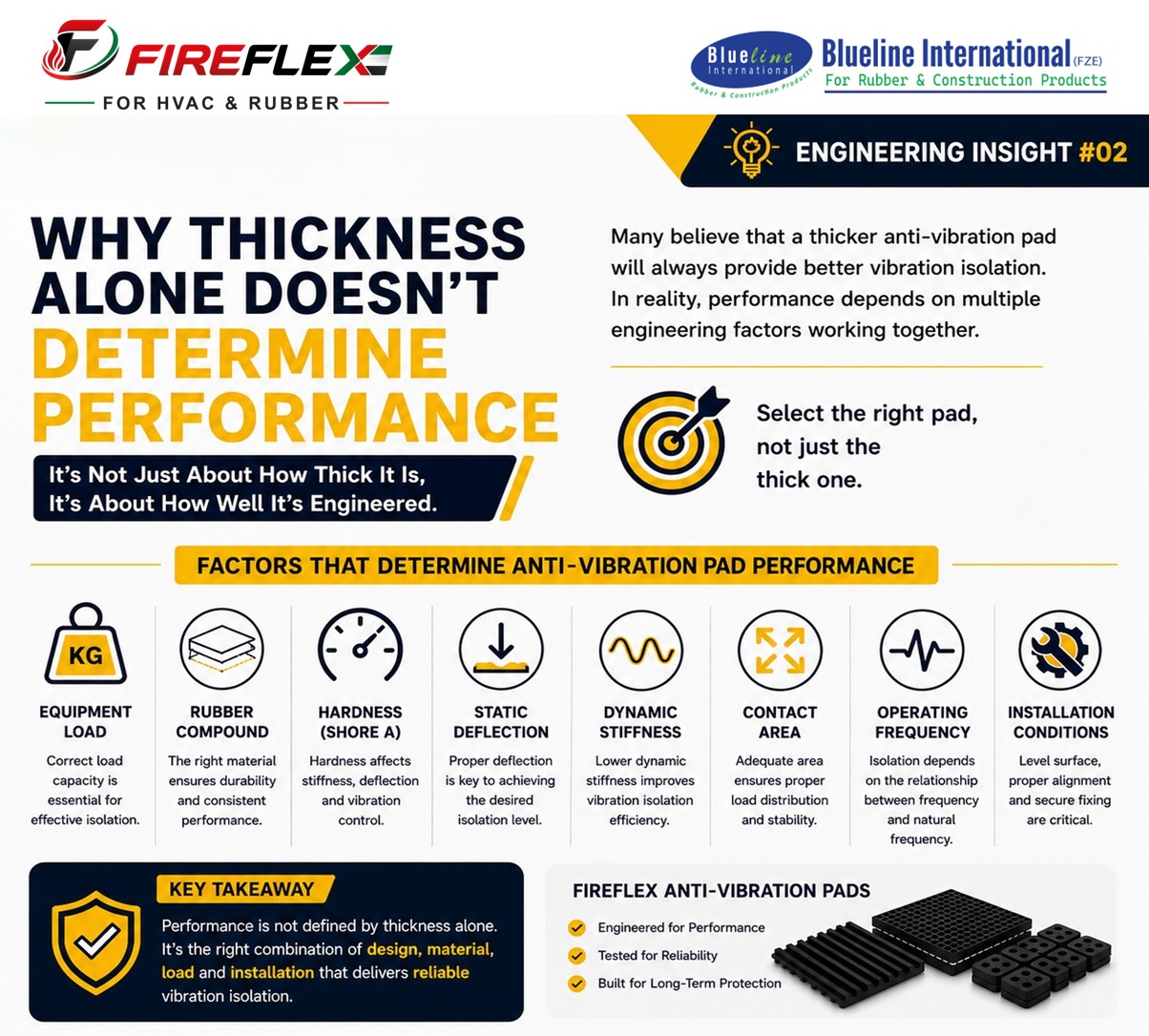
When selecting an anti-vibration pad, one of the most common assumptions is that a thicker pad will always provide better vibration isolation.
Although thickness is an important design parameter, it is not the only factor that determines performance. Effective vibration isolation results from a combination of engineering characteristics working together.
Thickness Is Only One Part of the Design
Increasing pad thickness without considering equipment load, material properties, and operating conditions does not necessarily improve vibration isolation.
In some applications, excessive thickness may even affect equipment stability or lead to higher deflection than intended.
Engineering Factors That Influence Performance
A properly selected anti-vibration pad is based on several key parameters, including:
- Equipment load
- Rubber compound
- Hardness (Shore A)
- Static deflection
- Dynamic stiffness
- Contact area
- Operating frequency
- Environmental conditions
- Installation quality
Each factor contributes to the pad’s overall performance.
Why Engineering Selection Matters
Selecting a pad based only on thickness may result in:
- Reduced vibration isolation efficiency
- Excessive movement
- Uneven load distribution
- Increased maintenance
- Premature equipment wear
Proper engineering selection helps ensure reliable vibration isolation and long-term equipment performance.
FireFlex Engineering Approach
FireFlex anti-vibration pads are selected based on engineering requirements rather than a single dimension.
By considering load, operating conditions, and application requirements, our technical team helps specify solutions that support long-term HVAC system reliability.
