
Choosing the Correct Rubber Grade for Elastomeric Bearing Pads
Selecting the right rubber grade is one of the most important decisions when designing or specifying elastomeric bearing pads. While the size and shape of a bearing pad are critical, the rubber compound itself has a significant impact on load capacity, durability, environmental resistance, and long-term performance.
There is no single rubber grade that is suitable for every application. The correct material should always be selected based on the project’s structural and environmental requirements.
Why Rubber Grade Matters
The rubber compound determines how the bearing pad responds to:
- Vertical loads
- Compression
- Shear forces
- Structural rotation
- Horizontal movement
- Temperature changes
- Weather exposure
- Ozone and UV
- Water and moisture
- Oils and chemicals
Selecting an unsuitable material can reduce service life and affect overall structural performance.
Common Rubber Grades Used for Bearing Pads
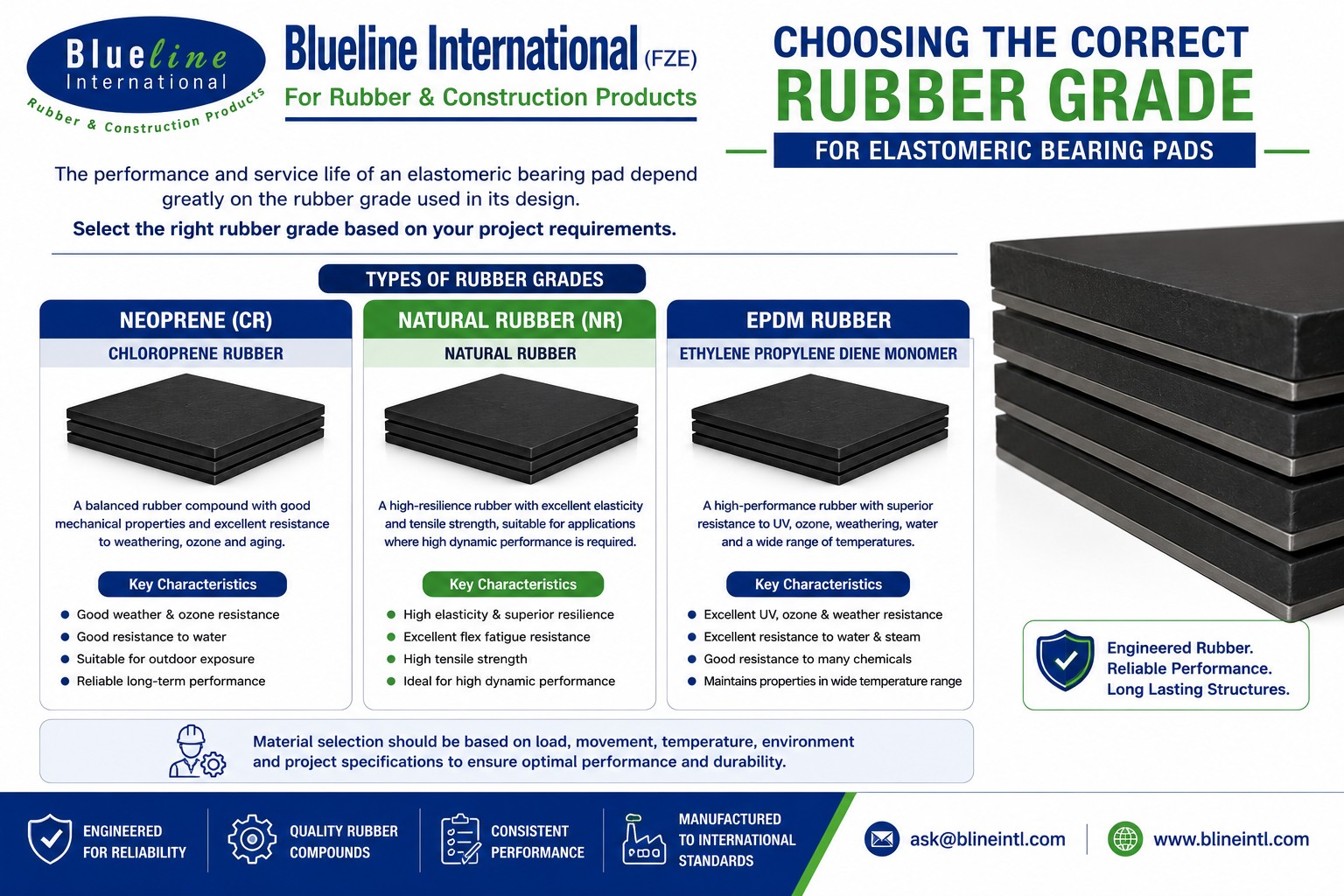
Neoprene (Chloroprene Rubber – CR)
Neoprene is one of the most widely used materials for elastomeric bearing pads because it offers a balanced combination of mechanical strength and environmental resistance.
Typical advantages include:
- Excellent weather resistance
- Good ozone resistance
- Reliable outdoor performance
- Good resistance to water
- Suitable for bridges and buildings
- Long service life
Neoprene is commonly specified for bridges, commercial buildings, parking structures, and precast concrete projects.
Natural Rubber (NR)
Natural rubber offers excellent elasticity and dynamic performance.
Typical characteristics include:
- High resilience
- Excellent flexibility
- Good fatigue resistance
- High tensile strength
Natural rubber is often selected where superior elastic properties are required and environmental exposure is limited.
EPDM Rubber
EPDM provides excellent resistance to weathering, UV radiation, ozone, and water.
Typical applications include:
- Outdoor structures
- High UV exposure
- Water-related projects
- Harsh weather environments
Factors to Consider When Selecting a Rubber Grade
The appropriate rubber compound should be selected after evaluating:
Structural Load
Higher loads require materials capable of maintaining performance under sustained compression.
Structural Movement
Horizontal movement and rotation influence the bearing pad design and material selection.
Environmental Conditions
Outdoor applications may require enhanced resistance to UV, ozone, moisture, or chemicals.
Service Temperature
Rubber properties can vary depending on operating temperature, making temperature range an important design consideration.
Project Specifications
Many infrastructure projects specify material requirements, performance standards, and testing criteria that should be followed.
Engineering Selection Is Essential
Material selection should never be based solely on product availability or cost.
A complete engineering review should consider:
- Design load
- Bearing area
- Compressive stress
- Rotation
- Horizontal movement
- Environmental exposure
- Applicable project standards
- Expected service conditions
Proper selection helps maximize performance while reducing future maintenance requirements.
Why Choose Blueline International?
Blueline International manufactures elastomeric bearing pads using carefully selected rubber compounds to meet a wide range of construction and infrastructure requirements.
Our capabilities include:
- Plain elastomeric bearing pads
- Steel laminated bearing pads
- PTFE sliding bearing systems
- Custom dimensions
- Technical support for material selection
- Manufacturing for UAE and GCC projects
Our engineering team assists consultants, contractors, and precast manufacturers in selecting the most appropriate bearing pad solution for each application.
Choosing the correct rubber grade is fundamental to the long-term performance of any elastomeric bearing pad. Factors such as structural loads, movement, environmental exposure, and project specifications all influence material selection.
Working with an experienced manufacturer helps ensure that the bearing pad is designed with the appropriate rubber compound for reliable structural performance and durability.
