
Why Cheap Rubber Costs More
Introduction
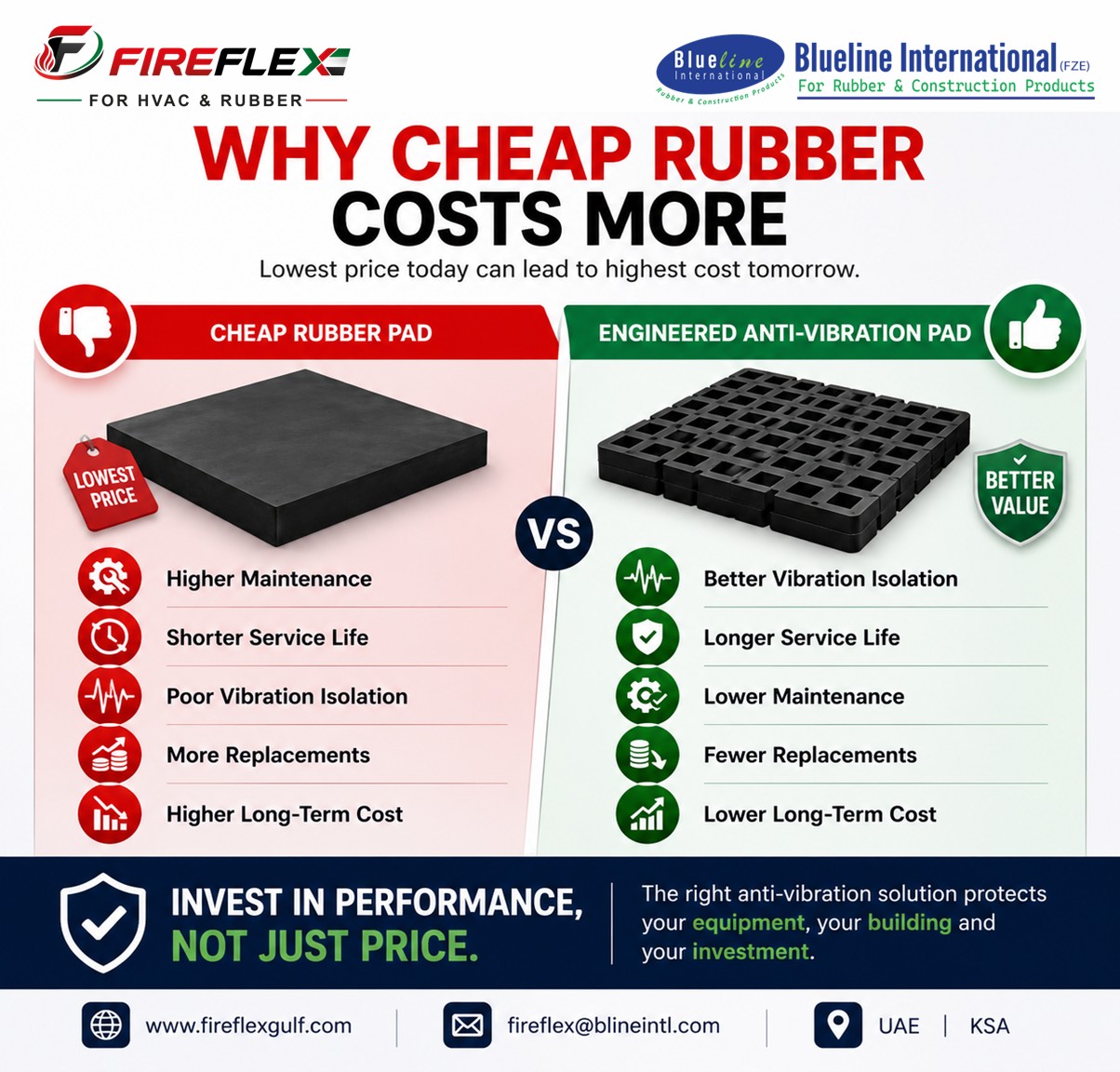
Choosing the lowest-priced anti-vibration pad may reduce the initial purchase cost, but it can increase maintenance expenses, equipment wear, and lifecycle costs over time.
For HVAC systems, the true value of a vibration isolation solution should be measured by its performance, durability, and long-term reliability—not simply its purchase price.
The Hidden Costs of Low-Quality Rubber
Low-quality or incorrectly selected anti-vibration pads can contribute to:
- Reduced vibration isolation efficiency
- Greater transmission of vibration and noise
- Increased equipment movement
- Premature pad deterioration
- More frequent maintenance
- Earlier replacement requirements
- Increased operational costs
What Should You Evaluate Instead?
Rather than comparing products only by price, engineers should also consider:
- Equipment load
- Static deflection
- Rubber compound
- Shore A hardness
- Operating environment
- Vibration isolation performance
- Expected service life
Why Lifecycle Cost Matters
A well-engineered anti-vibration pad can help reduce maintenance, protect equipment, and improve long-term operational reliability. Over the life of the installation, this often provides greater value than a lower-cost alternative that requires earlier replacement or results in additional maintenance.
FireFlex Engineering Approach
At FireFlex, our anti-vibration solutions are selected using engineering principles tailored to the application. By considering load, operating conditions, and performance requirements, we help customers choose products designed to support reliable HVAC operation over the long term.
The best anti-vibration pad is not necessarily the least expensive one—it is the one that delivers the best performance and value throughout the life of the equipment.
