
Can One Anti-Vibration Pad Fit Every Machine?
When specifying vibration isolation, it’s tempting to look for a single anti-vibration pad that works for every application.
While this may simplify procurement, it is rarely the best engineering approach.
Different machines generate different loads, vibration frequencies and operating conditions. Selecting the same pad for every application can reduce vibration isolation performance and may increase maintenance requirements over time.
Why Every Machine Is Different
Even machines with similar weights can behave differently during operation.
For example:
- A chiller has different operating characteristics than a cooling tower.
- A pump produces different vibration patterns than a standby generator.
- An AHU may require different vibration isolation compared with a compressor.
These differences influence the type of anti-vibration solution that should be selected.
What Engineers Evaluate
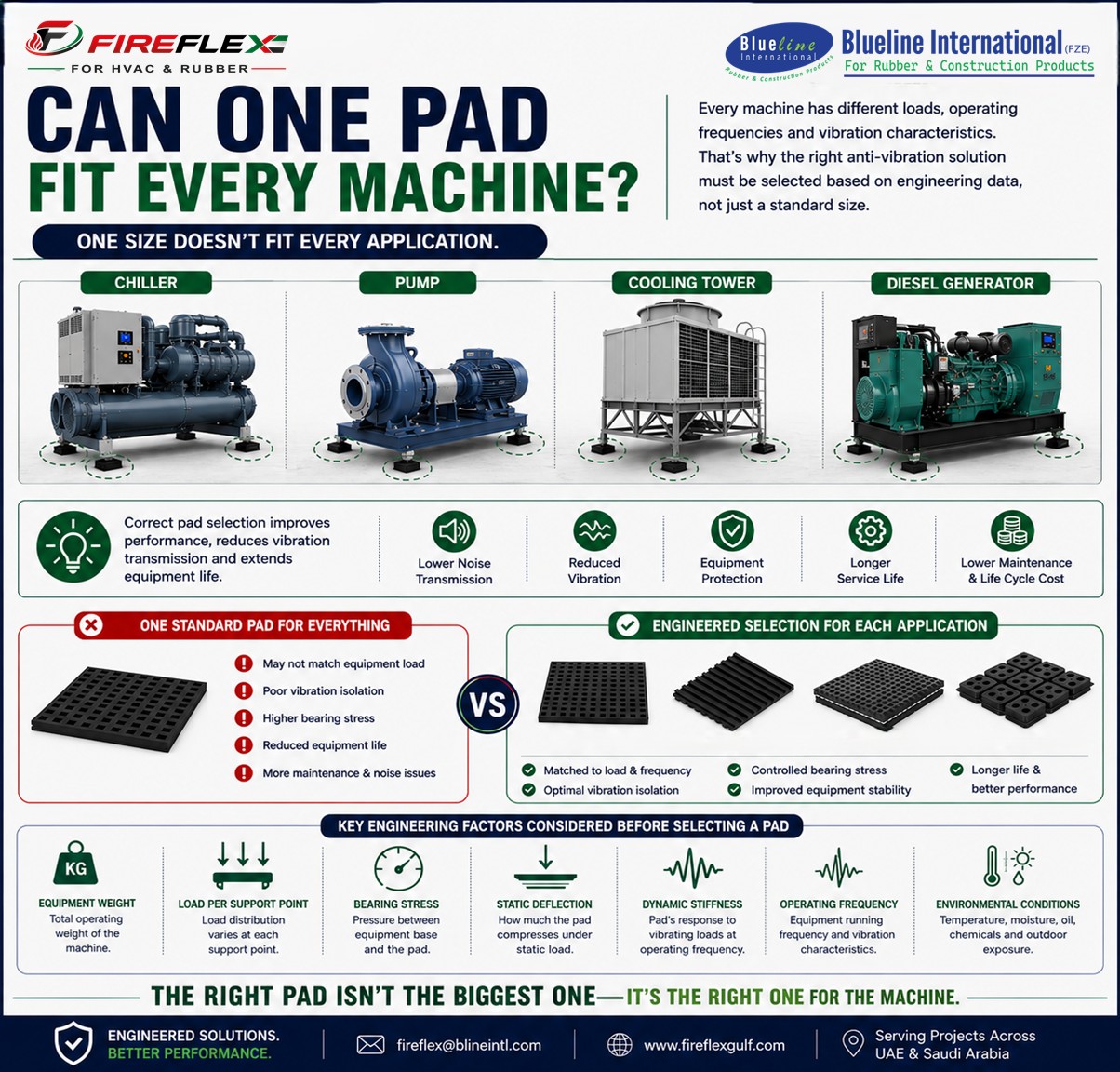
Before recommending an anti-vibration pad, engineers typically assess:
Equipment Weight
The total operating weight is the starting point for product selection.
Load per Support Point
Weight is rarely distributed evenly. Each support point should be evaluated individually.
Bearing Stress
The pressure between the equipment base and the pad should remain within the intended operating range.
Static Deflection
Static deflection influences how the pad performs under the equipment load.
Operating Frequency
The vibration characteristics of the equipment help determine the most suitable isolation solution.
Dynamic Stiffness
Dynamic stiffness describes how the material responds under vibrating loads and is an important consideration alongside rubber hardness.
Environmental Conditions
Temperature, moisture, oils and outdoor exposure can influence material selection.
Why a Standard Pad Isn’t Always the Best Choice
Using one standard pad for every machine may lead to:
- Reduced vibration isolation
- Uneven load distribution
- Higher maintenance
- Premature pad wear
- Increased equipment movement
- Reduced service life
Selecting a pad based on engineering data helps improve reliability and long-term performance.
FireFlex Engineering Solutions
FireFlex supplies vibration isolation products for:
- Chillers
- AHUs
- CRAH Units
- CRAC Units
- Pumps
- Cooling Towers
- Compressors
- Standby Generators
- Industrial Machinery
Our engineering team assists consultants and MEP contractors in selecting solutions that match the specific operating requirements of each application.
Why Choose FireFlex?
Rather than recommending a one-size-fits-all solution, FireFlex supports engineers with product selection based on:
- Equipment data
- Operating conditions
- Project requirements
- Engineering calculations
This approach helps improve vibration isolation performance and supports long-term equipment reliability.
Planning an HVAC or Industrial Project?
Need help selecting the right anti-vibration pad?
FireFlex can review your equipment details and recommend an engineered solution for your application.
Frequently Asked Questions
Can one anti-vibration pad be used for every machine?
Generally, no. Different machines have different operating loads, vibration characteristics and support requirements.
What determines the correct anti-vibration pad?
Factors include equipment weight, load per support point, bearing stress, static deflection, operating frequency, dynamic stiffness and environmental conditions.
Why shouldn’t I select a pad based only on size?
Pad dimensions alone do not determine performance. Engineering calculations are needed to match the pad to the equipment and application.
