
5 Common Anti-Vibration Pad Specification Mistakes in HVAC Projects
Anti-vibration pads play an important role in protecting HVAC equipment, reducing structure-borne vibration and supporting long-term system reliability.
However, the effectiveness of any vibration isolation system depends on selecting the right product for the application.
During our work with consultants, MEP contractors and project engineers across the UAE and Saudi Arabia, we’ve observed several specification mistakes that can affect equipment performance and maintenance requirements.
Understanding these common issues can help improve project outcomes and reduce lifecycle costs.
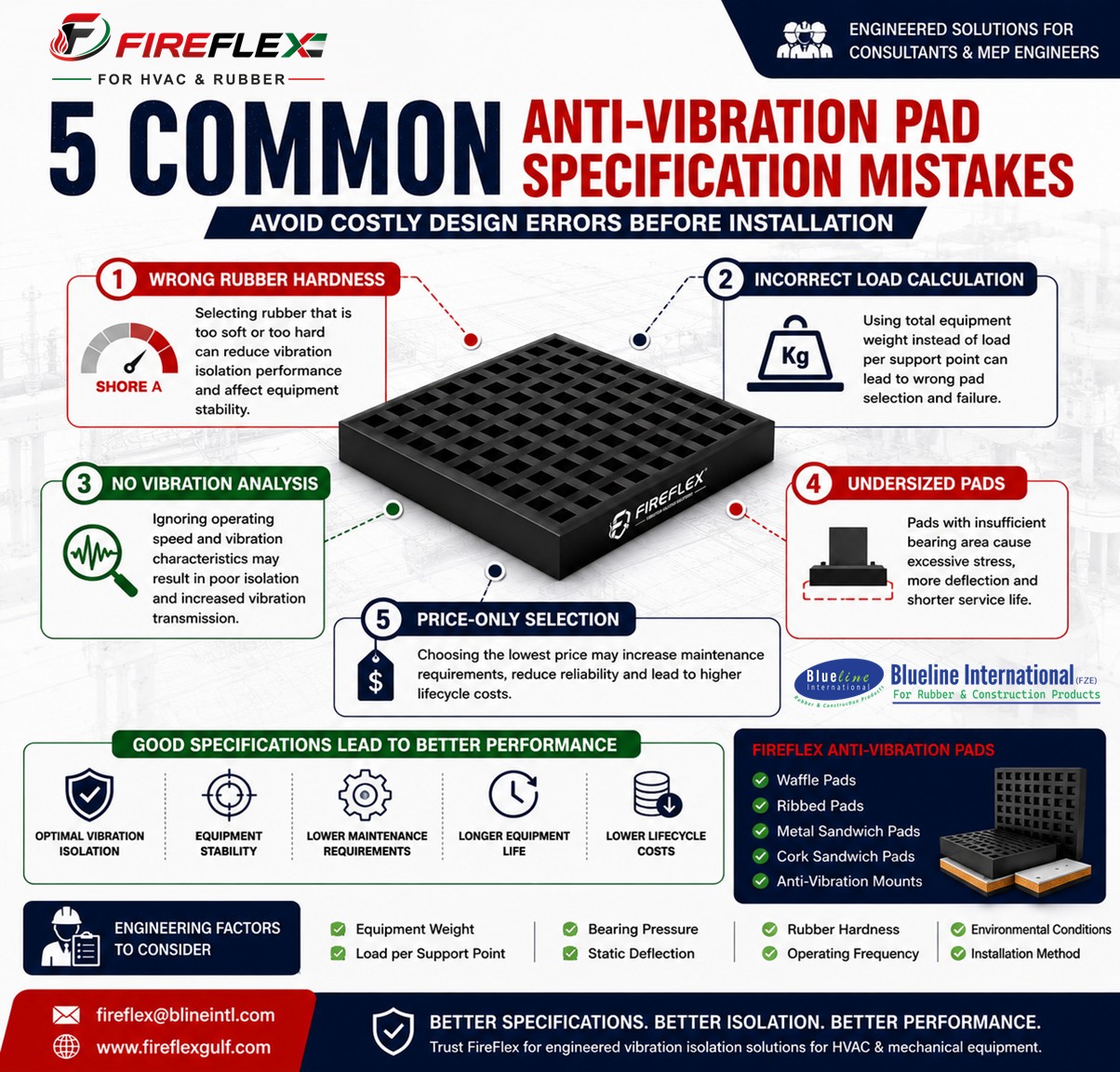
1. Selecting the Wrong Rubber Hardness
Rubber hardness (Shore A) influences how an anti-vibration pad responds under load.
A hardness that is too high may reduce vibration isolation, while a hardness that is too low may lead to excessive deflection under the equipment load.
The appropriate hardness should be selected based on the equipment characteristics and project requirements.
2. Ignoring Load Calculations
One of the most common mistakes is selecting pads based only on the total equipment weight.
In practice, engineers should determine:
- Load per support point
- Equipment weight distribution
- Bearing pressure
- Safety margins
Accurate load calculations help ensure each pad operates within its intended working range.
3. No Vibration Analysis
Equipment operating speed and vibration characteristics influence the effectiveness of vibration isolation.
Considering operating frequency and application requirements during the design stage helps improve the selection of suitable anti-vibration products.
4. Choosing an Undersized Pad
A pad with insufficient bearing area may experience higher compressive stress.
Potential consequences include:
- Increased deformation
- Reduced service life
- Higher maintenance
- Reduced equipment stability
Pad dimensions should be selected based on engineering calculations rather than available stock sizes.
5. Selecting Based on Price Alone
A lower purchase price does not necessarily provide the lowest lifecycle cost.
A properly selected vibration isolation solution may help reduce maintenance requirements, improve equipment stability and support long-term reliability.
Evaluating technical performance alongside cost leads to more informed decisions.
Best Practices for Consultants and MEP Engineers
Before specifying an anti-vibration pad, consider:
- Equipment operating weight
- Load per support point
- Bearing pressure
- Static deflection
- Rubber hardness
- Operating frequency
- Environmental conditions
- Installation method
A structured engineering approach helps improve equipment performance and supports reliable operation.
Why FireFlex?
FireFlex works with consultants, MEP contractors and project engineers to provide vibration isolation solutions selected according to engineering requirements.
Our technical team assists in choosing products that match the application rather than recommending a one-size-fits-all solution.
Planning an HVAC Project?
Need assistance selecting anti-vibration pads?
FireFlex can help review equipment loads, operating conditions and project specifications to recommend an appropriate vibration isolation solution.
Frequently Asked Questions
Why is rubber hardness important?
Rubber hardness affects how an anti-vibration pad responds under load and influences vibration isolation performance.
Should anti-vibration pads be selected using total equipment weight?
No. Engineers should calculate the load carried at each support point to ensure proper pad selection.
Why is vibration analysis important?
Operating frequency and vibration characteristics influence the effectiveness of vibration isolation and should be considered during product selection.
Does a larger pad always perform better?
No. Pad size should be determined through engineering calculations based on load, bearing pressure and application requirements.
