
Does Anti-Vibration Pad Size Matter?
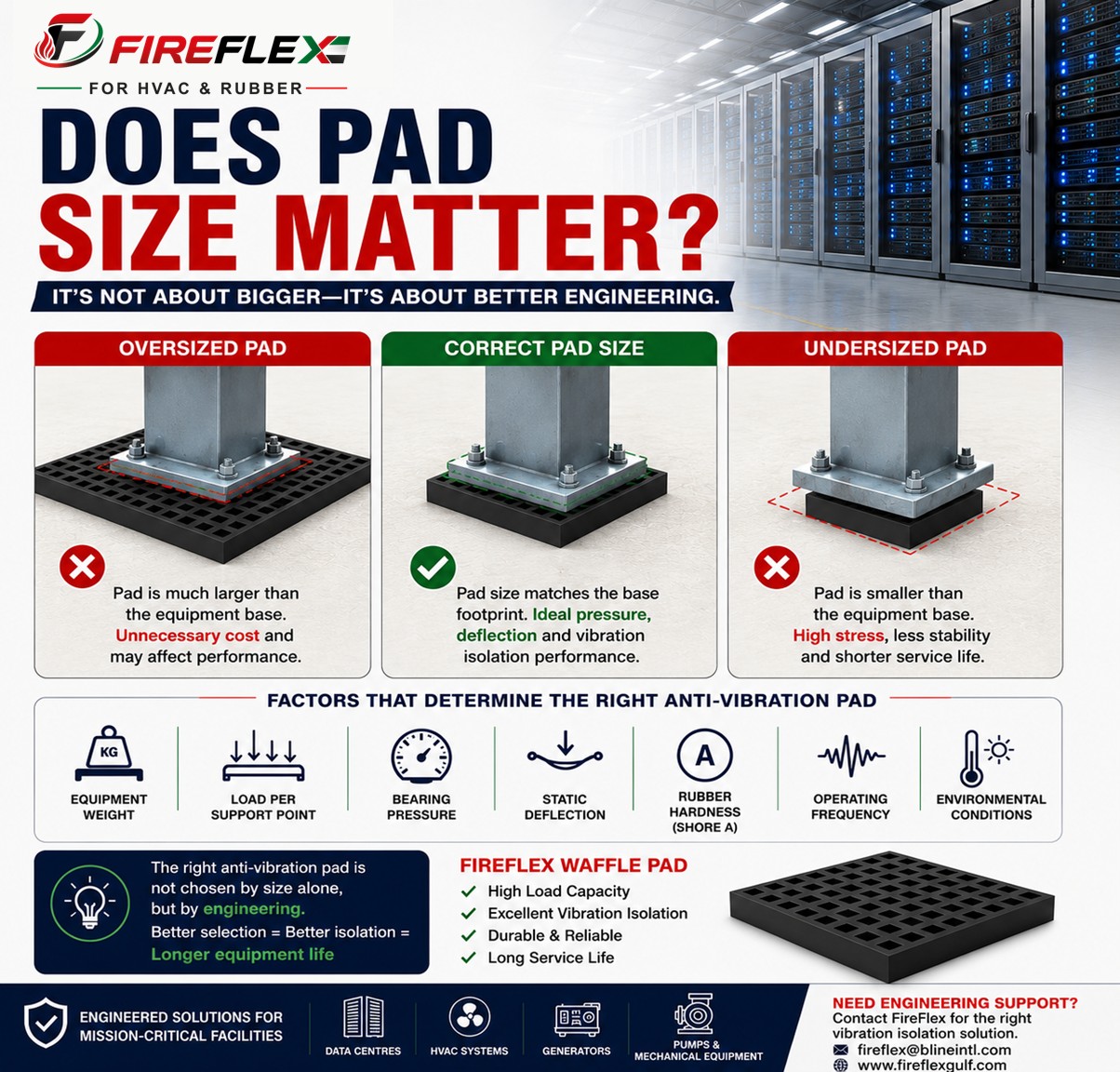
When specifying anti-vibration pads, many people assume that a larger pad automatically provides better vibration isolation.
While pad size is important, it is only one part of the engineering design.
Effective vibration isolation depends on selecting a pad that matches the equipment’s operating conditions—not simply its footprint.
Why Pad Size Alone Doesn’t Determine Performance
The size of an anti-vibration pad influences the contact area between the equipment and the supporting surface.
However, vibration isolation performance is determined by the relationship between:
- Equipment weight
- Load per support point
- Bearing pressure
- Static deflection
- Rubber compound
- Shore A hardness
- Operating frequency
- Environmental conditions
A larger pad without proper engineering consideration may not improve vibration isolation and could alter how the load is distributed.
What Happens If the Pad Is Too Small?
An undersized pad may:
- Experience higher compressive stress
- Reduce expected service life
- Increase deformation
- Affect equipment stability
- Require earlier replacement
What Happens If the Pad Is Too Large?
An oversized pad may:
- Reduce bearing pressure beyond the intended design range
- Change the working characteristics of the pad
- Increase material cost unnecessarily
- Occupy more installation space than required
The objective is not to maximise pad size but to optimise it for the application.
Engineering Factors That Matter Most
At FireFlex, we evaluate several factors before recommending an anti-vibration pad:
- Equipment operating weight
- Number of support points
- Load distribution
- Required bearing pressure
- Static deflection
- Equipment operating frequency
- Installation environment
- Long-term durability requirements
This engineering approach helps ensure the selected solution performs reliably throughout the life of the equipment.
Typical Applications
FireFlex anti-vibration pads are suitable for:
- Chillers
- Air Handling Units (AHUs)
- CRAH Units
- CRAC Units
- Pumps
- Cooling Towers
- Standby Generators
- Rooftop HVAC Equipment
Why Choose FireFlex?
FireFlex supports consultants, MEP contractors and project engineers with vibration isolation solutions selected using engineering principles rather than trial and error.
Our goal is to help customers achieve reliable performance, reduced vibration and long-term equipment protection.
Planning an HVAC or Mechanical Project?
Need help selecting the correct anti-vibration pad?
Our engineering team can assist you in choosing the right solution based on equipment load, operating conditions and project requirements.
Frequently Asked Questions
Does a larger anti-vibration pad always perform better?
No. The correct pad size depends on equipment weight, bearing pressure, static deflection, rubber hardness and operating conditions.
How is the correct pad size selected?
It is determined through engineering calculations that consider load distribution, support points, vibration frequency and the required isolation performance.
Can one pad size be used for all HVAC equipment?
No. Different equipment requires different pad sizes and characteristics based on its weight and operating conditions.
