

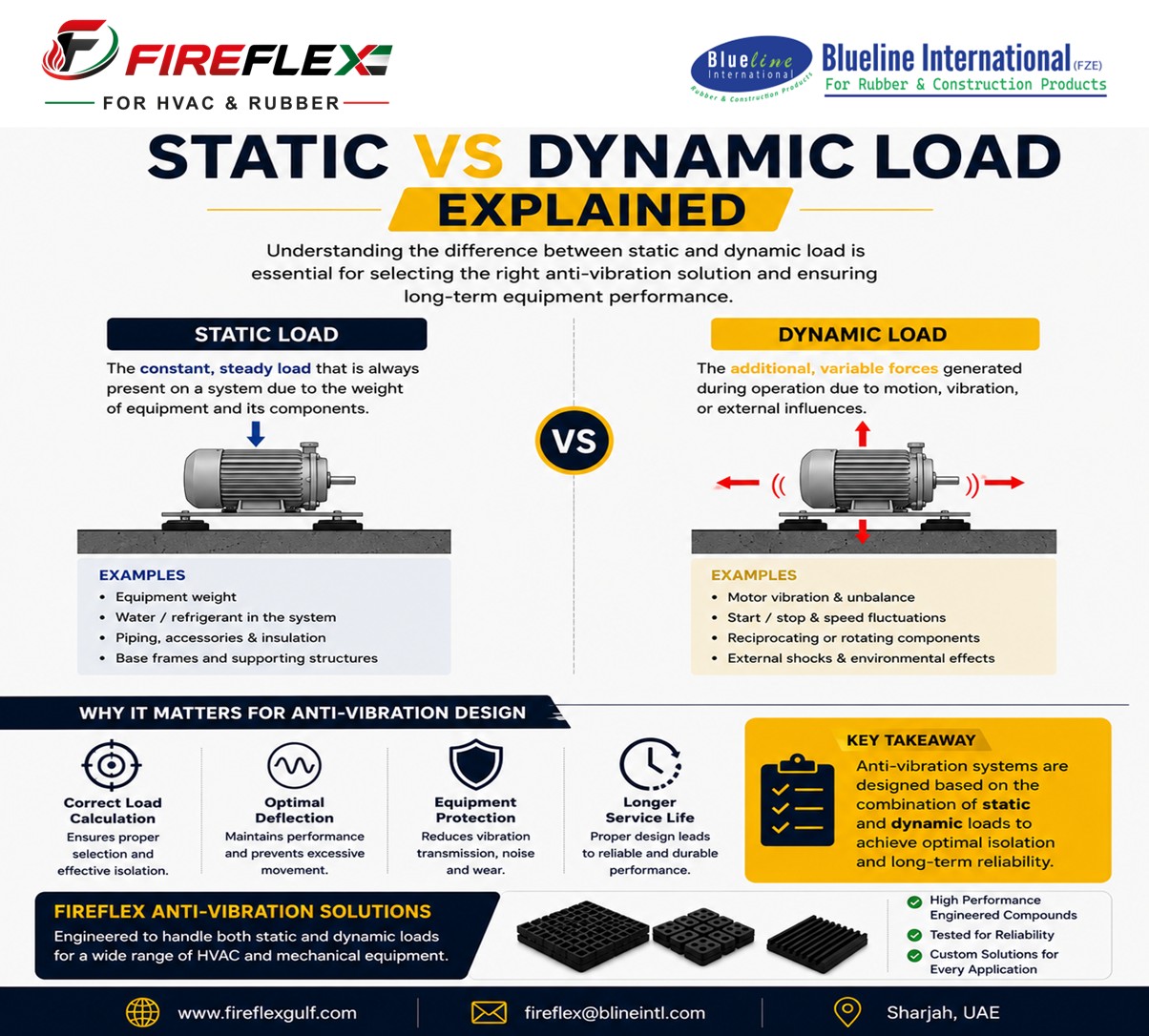
Static vs Dynamic Load Explained: Why Both Matter in Anti-Vibration Pad Selection
Selecting the correct anti-vibration pad involves more than simply knowing the weight of the equipment.
Every HVAC and mechanical system experiences two important types of loading: static load and dynamic load. Understanding the difference between these loads helps engineers, consultants and contractors choose vibration isolation solutions that perform reliably throughout the life of the equipment.
What Is Static Load?
Static load is the constant force applied to an anti-vibration pad when equipment is at rest.
Typical static loads include:
- Equipment weight
- Base frame weight
- Piping and connected accessories
- Refrigerant or water inside the equipment
- Permanent supporting components
Static load determines how much the anti-vibration pad compresses under normal operating conditions.
What Is Dynamic Load?
Dynamic load refers to the additional forces generated while equipment is operating.
These forces are created by:
- Motor rotation
- Fan imbalance
- Compressor operation
- Start-up and shutdown cycles
- Speed changes
- Mechanical vibration
- External operating influences
Unlike static load, dynamic loads continuously change during operation and directly influence vibration isolation performance.
Why Are Both Loads Important?
Selecting an anti-vibration pad based only on equipment weight may not provide the desired vibration isolation.
A properly engineered solution should consider:
- Static load
- Dynamic load
- Equipment operating frequency
- Required static deflection
- Rubber compound
- Dynamic stiffness
- Installation conditions
Considering both loading conditions helps achieve effective vibration isolation and long-term equipment protection.
Applications
Static and dynamic load calculations are important for vibration isolation beneath:
- Air-Cooled Chillers
- Water-Cooled Chillers
- AHUs
- FAHUs
- Pumps
- Compressors
- Cooling Towers
- Generators
- Fans
- Mechanical Equipment
FireFlex Engineering Approach
FireFlex anti-vibration pads are selected using engineering principles rather than assumptions.
By evaluating both static and dynamic loads, our technical team helps provide vibration isolation solutions suitable for real operating conditions, improving reliability and reducing maintenance over the equipment’s service life.
Frequently Asked Questions
What is static load?
Static load is the constant weight acting on an anti-vibration pad, including equipment, piping, fluids and supporting structures.
What is dynamic load?
Dynamic load is the variable force generated while equipment operates due to vibration, rotating components, start-up, shutdown and movement.
Why is dynamic load important?
Dynamic load affects vibration isolation efficiency and should always be considered alongside static load when selecting anti-vibration pads.
Can anti-vibration pads be selected using equipment weight alone?
Equipment weight is an important factor, but proper selection should also account for dynamic loading, operating frequency, deflection requirements and installation conditions.
